Friday, 8 April 2016

Rasmadhuri


April heralds the welcoming of new year all over India. It is amazing to see a true example of unity in diversity through the new year celebrations all over. The essence of the celebrations are more or less the same everywhere. 
Celebrated with different names, it basically marks the beginning of the harvest season and arrival of Spring.

It is called Vaisakhi in Punjab, Vishu in Kerala, Ugadi in Karnataka and Andhra pradeshChaitti in Himachal Pradesh, Mahavishuva Sankrant in Orissa, Navreh in Kashmir, Cheiraoba in Manipur, Puthandu in Tamil Nadu, Gudi Padwa in Maharashtra, Rongali Bihu in Assam.
Poila Boishakh is celebrated in West Bengal which literally means first day of the first month. An auspicious time for marriages and beginning of all business activities, it is celebrated with traditional dressing and food. 
Born and brought up in Kolkata, I have had a mixture of celebrations with each festival. To me, Poila Boisakh means the rustle and bustle at Chaitra sales, cleaning up the house spic and span, throwing away old unwanted things and bringing in new stuff. No Bengali festival is complete without their elaborate meals and it is the perfect time of the year to visit eateries serving traditional Bengali thali's-the amish and niramish ones. People are seen jostling in their favourite sweet shops to buy the most coveted mishti for the celebrations. Each shop burns the midnight oil to create sweet delicacies which are devoured with much fun and fervour.
Poila Boisakh is also incomplete without the traditional dressing. It is so wonderful to see the passionate and artistic community of Bengalis stick to their roots and wear traditional dresses. So while women don their favourite sarees, the men are seen with their Panjabi or dhoti. Even the little ones are seen donning traditional dresses. 
Bengali is one of the sweetest known language and throughout the day it is lovely to hear people wishing each other in the melodious 'Shubho Noboborsho'. 
An important part of new year is the cleaning of the house. It is Spring cleaning time of the year where old unwanted things are thrown away, houses are painted, nook and corners cleaned of dirt and pests. This is time of the year when the Summer has just entered the city and humidity is also a bit high hence cockroaches sneak out from their hiding and make their way into our homes, crawling in through the dirty drain pipes bringing in all the disease causing bacteria with them. The most easiest and sure shot way to get complete rid of them is Godrej LAL HIT, with its deep reach nozzle, it is able to get rid of the cockroaches hiding in your kitchen sink outlet, under the gas cylinder or under your fridge. This ensures a hygienic environment for the family which is of utmost importance, esp during Poila Boisakh where we are eager to cook the quintessential and delicious Payesh. From this Poila Boisakh onwards, make it a point while cleaning your kitchen to use Godrej LAL HIT in the places where cockroaches hide frequently-like sink outlets, under the fridge and gas cylinder and around the dustbin. 
I planned to try my hands on a mishti for this new year and have come up with Rasmadhuri where a rasagulla log is sandwiched with a saffron infused sandesh and then covered with the same. In the essence of the traditional festivity, I have placed the mishti in banana leaf wrappers. 


Ingredients : Yields about 6 in number
  • 500 ml cow's milk (or full cream milk)
  • 1 tbsp lemon juice/a pinch of citric acid
  • 1/2 cup sugar
  • 1 1/2 cup water
  • a tsp each of chopped almonds, pista and raisins
  • few strands of saffron in little warm milk
  • 2 tbsp powdered sugar
Procedure : 
Heat milk in a pan and let it come to a boil. 
Add citric acid/lemon juice and stir well. 
Soon you will see the milk curdling and whey separating. 
Wait till the whey separates well.
Remove from heat and using a muslin cloth drain the chenna(curdled milk) from whey. 
Hang the muslin cloth to drain excess water for half an hour. 
Remove and put on a plate. Cover with another plate and put a heavy object to drain any remaining liquid for about half an hour.
Take out the chenna and knead with the heel of your palm till smooth and reaches dough consistency. This requires patience and strong arm muscles and can take around 10 minutes.
Make cylindrical shapes out of 1/3 rd of the kneaded chenna and keep remaining aside.

Make sugar syrup by boiling 1/2 cup sugar and 1 1/2 cup water in a wide mouthed pan. 
Lower the log shaped chenna very gently in the sugar syrup.
Let them simmer on medium heat for 15-20 minutes or till they begin floating on the surface. 
Strain out the chenna cylinders and reserve for further use.

Alternatively, take sugar and water in a pressure cooker and as the syrup comes to a rolling boil, lower the chenna cylinders. Put the lid on and cook on medium heat for 2 whistles. Allow the heat to dissipate naturally and take out the cooked chenna cylinders.

Divide the remaining kneaded chenna again into two. To one part add  1 tbsp powdered sugar, chopped nuts and saffron infused milk. 
Cut the chenna cylinders into half and sandwich with the nuts and saffron milk added chenna.


Place these sandwiched logs in Banana leaf wrappers.

Add 1 tbsp of milk and 1 tbsp powdered sugar to the 1/3rd remaining chenna and mix it well. Add more milk if required to get a diluted consistency. Fill the banana leaf wrappers with this diluted chenna. 
Refrigerate for it to set.
Garnish with  saffron coloured streaks on top and a pista. 


Banana leaf wrapper can be made very easily at home. Here is a picture tutorial. 

Disclaimer : This post is in association with Godrej LAL HIT.

Shubho Noboborsho
Amrita

Poila Boisakh and some must haves to complete the celebration

It is time of the year to usher in merrymaking and welcome the first day of the new year in Bengali calendar, celebrated as Poila Boisakh. The passionate and artistic community of Bengalis celebrate this day with lots of élan-energy, style and enthusiasm. This new day of the new year is celebrated with a mix of old traditions and modern energy. 
Here are my 5 pointers to make your Poila Boisakh a memorable one

Decorating home
Perfect time of the year to get rid of old unwanted things and make space for new stuff. 
Go traditional with white Alpona/Alpana motifs on the floor using a paste of rice instead of colours. Create a traditional design to welcome all auspicious things to your home.
Adorn your vase with some fragrant flowers like Rajnigandha.
Jazz up your home decor with some kantha/batik cushion covers/ mats. 

Shopping fun -
Indulge in some shopping in the amazing Chaitra sales this time of the year which is the most awaited discount sale in the city.
Shop for new clothes for yourself and your family and also some home furnishings. 

Dress right -
The call of the day is to dress traditional. Don your pretty sarees and wear a beautiful neckpiece with long earrings.
Men must don a traditional attire too and therefore dress in batik or kantha Panjabi or a dhoti. 

Greetings -
The day is celebrated by touching feet of elders and getting their blessings for the new year. 
Exchange 'Shubho Noboborsho' wishes with near and dear ones along with a box of the quintessential Sandesh or your favourite Bengali sweet to complete the celebrations. 

Spic and span Kitchen - 
In the essence of the new year celebrations, ensure that your kitchen is clean and insect free. 
One of the biggest problems is complete riddance of cockroaches and nothing works better than Godrej HIT. With its deep reach nozzle, it ensures a no cockroach zone in every nook and corner. 

Nothing better than welcoming the new year with good health and high spirits. Shubho Noboborsho to everyone. 

Know more about the product :
Facebook : https://www.facebook.com/HITkpkd/?fref=ts
Twitter : https://twitter.com/HITKPKD
Order online here : http://www.amazon.in/HIT-Crawling-Insect-Killer-CIK/dp/B00XORDU9E/ref=sr_1_1?ie=UTF8&qid=1459950917&sr=8-1&keywords=lal+hit

Disclaimer : This post was written in association with Godrej HIT.   

Tuesday, 5 April 2016

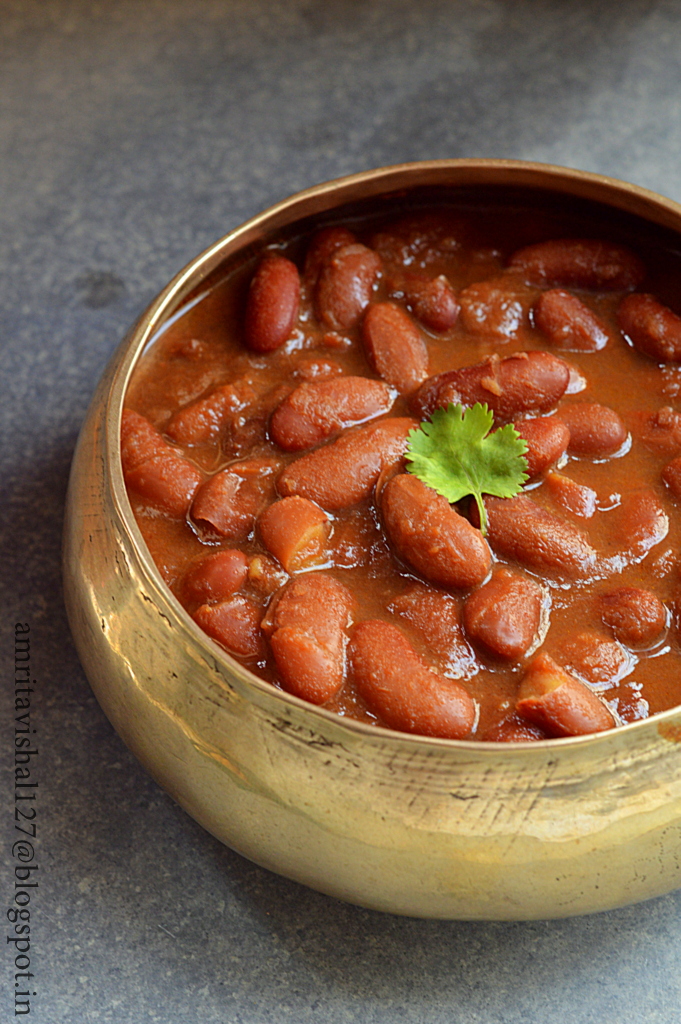
Rajma 'Massi wale'


Memories of my childhood are flooded with those sleeper class train journey's to Kotkapura, Punjab and the non stop fun I had with my cousins. We were together from morning to night playing, fighting, irritating each other and making the most of those few days of togetherness. It repeated every single year for a long part of my childhood and then we all grew up and went different directions. 
I have lovely memories of meal times as getting together for the family meant some special indulgence. My mamaji would always insist on dal-chawal-chokha (Dal, rice and mashed potatoes) made by my mother which was a real treat for all of us. Surprisingly, even though we are Sikh's, I remember both sides of my families relishing more on everyday vegetarian meals. No wonder I still love a simple vegetarian meal than a non-veg one. 
One such must dish during the holidays used to be my Massi's Rajma. My mom grew up with 2 sisters and 2 brothers and my Jinder Massi was the eldest of all. Jinder Massi, as I remember her from my childhood was always full of patience, love and understanding. She is such a warm hearted person who is full of understanding and love. I remember, she would deal with crisis with such composure. She as my cousin would call is Ma jaisi and therefore our Massi. 
This particular recipe is a little unconventional as she likes to use a little turmeric which is otherwise not used in Rajma recipes. The masala is also cooked in a different way where you will not require a grinder. Unlike some traditional recipes where Rajma is cooked and then added to the masala, here the Rajma is cooked in the masala so that it seeps into the beans. 
I simply love to pair my bowl of Rajma with boiled rice and the sweet tomato chutney from Bengal.


Recipe courtsey : My adorable Jinder Massi

Ingredients : For 2-3 servings
  • 1 cup rajma (red kidney beans), preferably Jammu variety (soaked overnight) 
  • 1 onion, roughly chopped
  • 5-6  whole cloves of garlic
  • 1/2 " ginger, grated
  • 2 tomatoes, grated
  • 2 tbsp refined oil
  • salt as required
  • 1 tsp garam masala 
  • 1/4 tsp turmeric powder
Procedure : 
Take a pressure cooker and put chopped onions, garlic cloves and grated ginger with a splash of little water. Close the lid and let it cook for 3-4 whistles.
Let the steam escape naturally. 
Open and mash them up with the back of a ladle.
Put it back on flame and let the water evaporate completely. 
Put oil in the pressure cooker and now cook the mixture till it separates oil (for about 8-10 minutes) on medium flame. 
Add grated tomatoes and let it cook for 5 more minutes. 
Add turmeric powder and salt and cook for 2 minutes.
Now add the drained Rajma and cook it for another 5 minutes. Stir in garam masala. 
Add 3 cups of water and close the lid. 
Let it cook on high flame for 2 whistles and then reduce the flame to low and cook for another 20-25 minutes. 
Let steam escape naturally. 
Remove the lid and adjust salt.
If gravy is too thin, put it back on flame and reduce to your requirement. 
Garnish with coriander leaves. 
Pair it with roti/parantha or rice.


Happy Rajma relishing
Amrita

Thursday, 17 March 2016

Awadhi Food Festival, Swissotel, Kolkata


 The Awadhi Food Festival at Durbari, Swissotel Kolkata was very special for me in many ways. It was more than food blogging, more than being a food enthusiast or an opportunity as a Kolkata Food Bloggers to cover the event. It was literally a call to bring back memories of my childhood spent in Lucknow. It was nostalgic. 

Although I had spent relatively a very short part of my formative years in Lucknow between grade 3 and 5, they were however very impacting. It was there that I first fell in love; fell in love with Kebabs. Little I knew that this influence would shape a lot of what I am right now. Much of my current food related learning are still based in around the world of kebab and the Awadhi Food Festival made me fall in love with it all over again.

Ofcourse Awadhi Food is not just about kebabs and that was represented so well at Durbari where the menu covered a lot of other aspects of the cuisine from soups to starters, main course and dessert.   


The galavat kebab is one of the signature dishes of Awadhi cuisine. Its a minced lamb kebab with flavourful spices. It has for generations been a favourite dish of a lot of people and have attracted people from far and wide to relish it. The galavat kebab served at the Durbari was not only as soft, flavourful and consistent as they looked but there was a vegetarian version of it which, if I was not told, I would have definitely mistaken it for a lamb one (which was served later). 


Paneer Mumtaz was a cottage cheese in mildly spiced tomato gravy. Very beautifully presented and having a beautiful gravy consistency. 


The Aloo Karare (Or Crispy Potato) had a very interesting crackle with coriander seeds along with other spices. Definitely a new potato dish I had tried.  


The bread segments had Keema naan, warqi paratha, rumali roti, tandoori roti etc to go along with the main course dishes. The biryanis and other rice options are also there for the taking. 


The nawabi gosht korma or spring lamb cooked in homemade spices was surely one of my pick for the evening. A very tender lamb with an amazing gravy. 


The dessert section had the Kesarya Nawabi Phirni (saffron flavoured sweetened milk and rice) and Sahi Tukda (awadhi dessert with bread and sweetened reduced milk, dry fruits and milk.)

Current GM Marco Saxer in a jovial mood, as always)

As dubbed by the current GM Marco Saxer,"The correct way to handover to the new incoming GM Subhrajit Bardhan"

Having a great time talking to the amazing chefs behind the Awadhi Food Festival
The Awadhi Food Festival will be held only at at Durbari, Swissotel Kolkata Neotia Vista from 17th to 27th March 2016. The timings are Monday to Sunday from 1900 Hrs to 2300 Hrs for Dinner and lunch exclusively form Friday to Sunday at 1230 Hrs to 1500 Hrs.  

Happy Nawab-ing


Vishal Tupper

Wednesday, 2 March 2016

Chocolate glazed Doughnuts


It is amazing how we can push our abilities in times of need. Recently I had the opportunity to participate in a bake sale and managed to churn out quite some goodies in no time. I was amazed at my speed and realized that lack of time is always just an excuse we give ourselves.  
Amongst all the ideas that were floating in my head, I had almost ditched the thought of baking doughnuts because I was really not sure of its sale. But then there was this rising impulse inside me that made me jump up and make the dough and allow it to rest. The fluffy dough was then cut in the shape of a doughnut and fried to a beautiful golden colour. The doughnuts tasted light and fluffy and along with the chocolate glaze turned out to be an absolute treat. 
The icing on my baked goodies is always the family approval esp my daughter's. She was dying to put her hands on the chocolate slathered and sprinklers loaded doughnuts. I waited with a bated breath and saw her reaction as she picked one doughnut. Her head swung in an 'Ummmm' and I instantly knew I had baked goodness. 
The sale did not go too well and I ended up bringing most of the goodies at home. No one regretted as it meant a week long sweet feast at home. :)


Recipe source : Adapted from here

Ingredients : I have reduced the recipe to half and achieved about 14 medium sized doughnuts
  • 1/2 tbsp instant yeast
  • 1/2 cup or more warm milk
  • 1/4 cup powdered sugar
  • 1 egg
  • 1/4 tsp salt
  • 2 1/2 cup all purpose flour
  • 2 tbsp butter, softened
  • refined oil for frying
  • dark chocolate, melted
  • Sprinklers
Procedure : 
Take flour, sugar, salt and yeast in a bowl. Stir.
Add egg. Stir.
Add warm milk a little at a time and knead to a smooth dough. You may require more than 1/2 cup of milk. 
Add butter and knead. 
Take another bowl and grease it. Put the dough in it and cover with a damp muslin cloth. Leave it for an hour or more to double in size. 
You can also refrigerate the dough after the rise in case you want to use next day. Just let it come to room temperature before you roll, cut and fry.
Roll your dough and cut in doughnut shape using round cookie cutters of different size. Let it sit for 1/2 - 1 hour.  
I usually knead the hole back in the dough. You may like to fry them separately too. 
Put oil to fry the doughnuts in a deep pan.
Fry the doughnuts in medium heat till they are golden brown.
Drain on a kitchen towel or a tissue napkin.
Keep melted chocolate in a wide bowl. Dip the doughnuts in it halfway and sprinkle with colourful sprinklers. 
Doughnuts are best eaten the same day, almost soon after frying. You can also refrigerate excess dough and fry fresh as and when needed


Kolkata Food Bloggers are organizing a one of its kind Bake'rs Showcase featuring the best talent in Homebaker's. Folks in Kokata, please book your date and join us in this endeavor where you are guaranteed to find some amazing and creative bakes. Find more details here .


Happy Doughnut eating
Amrita

LinkWithin

Related Posts Plugin for WordPress, Blogger...